

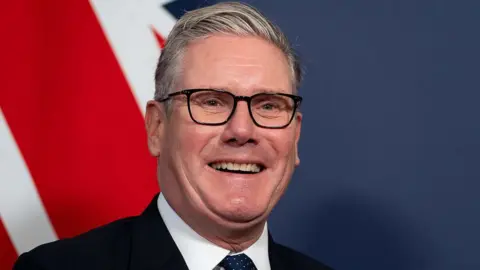
 Image Source
The Prime Minister's particularly significant shift on the Britain's after-Brexit ties to the European Union on Saturday was intended to signal to industry, to Brussels, and to other European capitals, as well as his own backbenchers.
A New Process for Dialogue
Stronger post-Brexit trade links are currently anticipated to be examined as through an regular schedule of direct negotiations as opposed to exclusively at the ongoing structured evaluation of the UK-EU deal.
This constituted the official answer to parliamentary pressure regarding a broader post-Brexit overhaul that involved rejoining the EU customs bloc.
Internal Momentum
Several parliamentarians, labor representatives and government figures have added their voices to proposals formalised by a vote last year that led to a advisory motion.
"It is better prioritising the single market as opposed to the customs bloc for our future cooperation," Sir Keir Starmer remarked.
He gave a clear answer that rejoining the tariff union was a lower priority, as it goes against what he views as one of the successes of the past year: the securing of comprehensive trade pacts with the America and India, with more in the pipeline in the Middle East.
Emphasising the Internal Market
In place of the common external tariff, his emphasis is on forging a "more integrated partnership" with the EU's single market, which would not mean tearing up those international pacts with other nations.
When the UK formally left the EU in early 2021, the agreement at the time prioritised freedom from EU regulations over barrier-free exports for UK businesses to the continent.
The present recalibration proposes realigning with EU standards in specific fields to promote the easier passage of trade: agri-food goods, energy, and emissions trading.
Commercial Requests
A major business group last month released a detailed set of additional asks in various industries to assist exporters deal with new bureaucratic hurdles that has hampered the export of products.
Its own survey reported that a significant number of companies surveyed agreed that the current arrangement was not helping sales growth.
A host of further domains could, realistically, see a parallel method – alignment with EU regulations – in exchange for lowering post-exit friction across production, in automotive, chemicals, or for example in arrangements for VAT.
EU Response
Member states were unimpressed by the lack of ambition in earlier discussions, particularly the London's refusal of ideas advanced by some experts regarding the virtual readmission of British goods to the internal market.
The specific detail on energy cooperation and food and farm standards is still to be agreed. A proposal for UK companies to be involved in a European security fund has stalled over the size of the membership fee, after reservations from Paris. Another nation has joined the initiative.
Broader Environment
The UK has reached an agreement to participate once more in a university exchange programme and to continue talks on a young workers initiative. This has facilitated progress for subsequent negotiations.
Analysts close to government note that the recent publication of a American national security strategy has altered the context on UK European policy.
The document stated that the US would "foster opposition" to continental trends and applauded the "growing influence" of certain political parties.
Within the administration, there is a growing awareness that the global landscape has changed again.
Political Considerations
At home, the leadership also foresees being pressured on EU relations not only one opposition party, but also others, which is targeting its key electoral areas in upcoming council elections.
The Premier's weekend remarks are stem from a combination of business needs, politics and geopolitics as the UK starts a year that will mark the ten-year mark of the historic Brexit referendum.


